Welcome!

If you are here to explore working with a Spiritual Director, you may well be in the right place. Explore the site -- go to the GETTING STARTED (FAQ) page where many of your questions may already be answered; read the blog and listen to how you feel; follow some of the links to learn more; find out a little something about my background. If you'd like to contact me -- either to set up an appointment or ask a questions, there's a contact form on the right side of each page that you can use to MAKE A CONNECTION.

Most simply, though, the spirit of my practice can be summed up in these words (adapted from Robert Mabry Doss): For those who come here seeking God ... may God go with you. For those who come embracing life ... may life return your affection. And for those who come to seek a path ... may a way be found, and the courage to take it step by step.
Showing posts with label listening. Show all posts

Monday, May 20, 2019

Switch Things Up

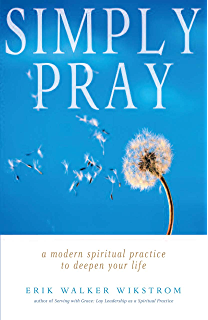
In my book Simply Pray: a modern spiritual practice to deepen your life I describe four different types of prayer:  Naming, Knowing, Listening, and Loving.  I describe in detail in the book, of course, and I wrote a post here -- Types of Prayer -- back in September of 2018.  Here's the briefest of overviews:

  • Naming prayers are like prayers of praise, thanksgiving.  They focus on naming the things we are grateful for in our lives -- the glory of a sunrise, a loved one's presence in your life, your life itself, the Infinite and Inestimable I Am.
  • Knowing prayers are like prayers of confession.  That term -- confession -- carries a lot of baggage for a lot of folks today, some of it deserved and some not.  Think instead, then, of Step 4 of Alcoholics Anonymous:  "a searching and fearless moral inventory."  Just as a shopkeeper should take inventory regularly, making note of the things they have that are in good shape as well as those that are outdated or in some other way(s) spoiled.  No shame, no blame, no condemnation.  These prayers aim to help us in truly knowing ourselves -- strengths and weaknesses, both.
  • Listening prayer is about silencing the internal chatter and listening to what the writer(s) of  the Biblical book 1 Kings called "the still small voice."  (I've been told that a better translation is "the voice of quiet stillness.") 
  • Loving prayers are analogous to prayers of petition or supplication.  Call to mind those who are in need of support, strength, comfort, love.  Make sure to include yourself in these!  These prayers are an opportunity to express your loving intentions.

Is there one of these types of prayer that speaks most strongly to you?  Some religious traditions tend of focus more on one than the others, and many people seem to have a natural inclination toward one.

As an experiment -- switch things up.  For a month (or even just a week, depending how frequent your practice is), spend less time with the type of prayer to which you're usually drawn and emphasize a type you'd be more likely to minimize.  If you keep a journal, note what this switch surprises you with.  This could also provide a great topic for conversation with a spiritual director.


Pax tecum,

RevWik


Monday, September 17, 2018

A Modern Prayer Bead Practice (pt. 3)

Today we're picking up on a detailed explanation of the prayer bead practice I wrote about in my book, Simply Pray: a modern spiritual practice to deepen your lifeOn Monday we looked at how to make the beads, and began the "journey" as far as the first medium-size bead, the Naming bead.  On Wednesday, we looked at the five small beads which follow the Naming bead, and described how to use them to facilitate a breath prayer practice.  Today we'll be able to zip through the rest of the practice, because all of its elements have already been explored.

After the large Centering bead, the four small Entering Beads, the medium-size Naming bead, and the recitation of your breath prayer with each of the next five small beads, you come to the second medium-size beads.  This is the Knowing bead.  "Knowing" is one of the four primary types of prayer that I have found to be common among all of the great spiritual traditions we humans have discovered/developed.  Just as "Naming" corresponds in some ways to the Christian practices of "praise" and "thanksgiving," Naming the things in our lives for which we are grateful and which give us joy and an experience of the holy, "Knowing" is somewhat analogous to "confession," in that we take the time to Know ourselves in our totality, good and bad alike.  It is like the practice in 12 Step spirituality of taking "a fearless moral inventory" of ourselves.

So at this medium-size bead we are invited to stop, and to contemplate those parts of ourselves we would rather keep hidden away ... from others, if not also from ourselves.  This isn't a time for self-flagellation, for who we are is who we are, and pretending that this isn't true doesn't make it any less so.  My sins, faults, failures, weak and wounded places -- these are all a part of me, and if I claim to be engaged in a spiritual practice, if I claim to seek a spiritual life, yet do so without making the whole of me present ... I am deluding myself.

As with the first medium-size bead, the Naming bead, you can do this Knowing in all sorts of way -- speak aloud, think about it, or just allow the feelings to come to the surface and be recognized and acknowledged.  Some people have a list of things which they recite when they come to this Knowing bead; others allow their minds to go blank and see what arises on its own.  Remember -- there is no wrong way to pray!

Following the Knowing bead there are, again, five small Breath Prayer beads.  As you touch each of these you would recite the same breath prayer you used with the previous five.

You come next to another medium-size bead, which is the Listening bead.  Here you are encouraged to try to quiet your mind, to let go of any thoughts -- however important or random they may seem.  In the Hebrew scriptures the character of God is called "the still small voice within," although I've also heard this phrase translated as, "the voice of quiet stillness."  This Listening bead offers an opportunity to try to step out of the cacophony that defines so much of our lives, and in that space to listen for that quiet voice.  Following the Listening bead there are another five small beads with which you again recite your breath prayer -- one line per breath, one whole prayer per bead.

That will bring you to the last of the medium-size beads, the Loving bead.  This is where you move the focus of your praying from within you to beyond yourself.  Many spiritual traditions have practices designed to help you pray for someone else, and with this Loving bead you have the chance to do that, too.  Some people recite a list of people they know who are going through a hard time and who could use some good thoughts and "positive vibrations" sent their way.  Others simply go through a list of people in their lives, often starting with family, then close friends, co-workers, acquaintances, moving outward in expanding circles of care.  At the Shalem Institute for Spiritual Formation, where I did my training in spiritual guidance, they teach a practice in which you empty your mind and, first, allow the thought of someone close to you to come into focus, and to then see what comes up as the needed prayer for that person.  Next, let the thought of someone who is not so close come into your mind and heart, and see what prayer arises for them.  Finally, you open yourself to the thought of someone you don't particularly like, or with whom you are currently struggling, and see what prayer arises for them.  [This practice grows out of their understanding that we don't pray but, rather, that God is always praying within us.  What we do during our prayer time, then, is work to quiet our own inner monologues enough to hear what God's prayer in us is.]

As with the other medium-size beads, there really is no "wrong" way of doing this:  speak aloud, see the images of people in your mind's eye, allow the feeling of love to bubble up in you and flow out into the world.  And unlike with the small Breath Prayer beads, you do not have to do the Naming, Knowing, Listening, and Loving in exactly the same way each time you engage this practice.

On Monday I'll write a bit more about how to put all of this together, but there are still four beads left before we've completed our circuit.  After the medium-size Listening bead there are four small beads between it and the large Centering bead where we began.  Do you remember the first four beads we used to "enter" into the practice?  I said that they're kind of like the stretching and warm-up before a period of exercise.  These four, then, are the cool down, and whatever you did with the first four, as a way of Entering, you do again with these four as a way of Departing.

And there you have it ... the nuts and bolts of this prayer bead practice.

Pax tecum,

RevWik

A Modern Prayer Bead Practice (pt. 2)

On Monday we began moving through the prayer bead practice I describe in my book, Simply Pray: a modern spiritual practice to deepen your life.  We looked at how to make the beads, and went through the large Centering bead, the four Entering beads, and had landed on the first medium-size bead, the Naming bead.

Following the Naming bead there are five small beads.  These are for the "rote" style of praying I'd said was one of the two fundamental styles of prayer.  ("Improvisational," or, "spontaneous" is the other.)  With each of these five small beads you are invited to practice what is often called a "breath prayer."

Although often cited as a Christian practice, the concept of praying along with one's breath can be found in numerous other traditions.  The Vietnamese poet, peace activist, and Buddhist monk Thich Nhat Hanh has written extensively about the importance in the Vietnamese Buddhist tradition of reciting gathas -- short verses repeated on the rising and falling of the breath.  His most often cited gatha is, "Breathing in, I relax my body and my mind. / Breathing out, I smile."  He teaches, though, that he was trained with a gatha for virtually every action of the day:

  • On waking -- "Waking up this morning, I smile.  Twenty-four new hours are before me. / I vow to live fully in each moment and to look at beings with eyes of compassion:
  • Washing your hands -- "Water flows over these hands. /  May I use them skillfully to preserve our precious planet."
  • Using the toilet -- "Defiled or immaculate, increasing or decreasing -- these concepts exist only in our mind. / The reality of interbeing is unsurpassed."
  • Driving the car -- "Before starting the car I know where I am going. / The car and I are one.  If the car goes fast, I go fast."
  • Throwing out the garbage -- "In the garbage I see a rose.  In the rose I see compost. / Everything is in transformation.  Impermanence is life."

With this gatha practice, as with any of the "rote" practices, it doesn't matter how you're feeling on any particularly day, you still recite the gatha when you wake up, when you wash your hands, and when you through out the garbage.

The breath prayer you use with the five small beads in this prayer bead practice is a little different.  You will still recite the same prayer on you in and out breaths as you finger each bead, yet you will have written the prayer yourself.  You can, of course, use a traditional two-line phrase, one that is from the religious tradition you were raised in or associate with now.  You don't have to, though.  What matters most is that whatever you repeat on your in-breath and your out-breath is meaningful to you.

Or, rather, that it was meaningful to you when you first established it.  The practice with these small beads is intended to be a rote practice, so while you are encouraged to "improvise" in creating your own breath prayer, you are dis-couraged from changing it too readily.  Use that same in-breath/out-breath prayer every day you do this bead practice, no matter how you're feeling about it on any particular day.  This provides an opportunity for you to experience what those who really engage with the Catholic rosary, for instance, experience -- through repeating the same words over and over, those same words can come to express different meanings.

I would suggest staying with one breath prayer for these small beads for at least several months -- I'd suggest no less than six months -- before coming up with another.  Of course, if you keep finding yourself consistently saying other words instead -- especially if it's a small tweak -- I'd encourage you to listen to that leading.  Make that change, and then stick with those new words.

On Friday we'll pick this up at the second medium-size bead.

Pax tecum,

RevWik

A Modern Prayer Bead Practice (pt. 1)

Last week I outlined the prayer bead practice I describe in my book Simply Pray: a modern spiritual practice to deepen your life, yet I know that not everyone learns the same way.  A written description is fine for some, but not for everyone.  So this week I'm offering a video I've made.


Monday, September 10, 2018

Types of Prayer

As noted in the last post, the prayer bead practice I describe in my book Simply Pray: a modern spiritual practice to deepen your life uses what I call the two "styles" of prayer -- rote and improvisatory.  Today I want to say a little something about the four "types" prayer incorporated in this practice.

When you look at prayer practices from a distance, looking at them across traditions and without attaching any particular theological limitations to your exploration, you'll notice certain types of prayer are present just about anywhere the concept of payer, itself, is present.  The wonderful Anne Lammott suggests in her book Thanks, Help, Wow: the three essential prayers, that there are, well, three essential prayers.  Those prayers can be summed up in those three words:  thanks, help, and wow.  I think that she's missed one, so my practice leads you through four.

First, there are prayers of gratitude.  While there are "technical" differences, I think that you can take prayers of thanksgiving, and prayers of praise, and consider them both to be prayers of gratitude.  And it makes sense to me that any practice of prayer should start with a recognition, a conscious awareness of and attention to, the beauty, the miracles, around us.   One of E. E. Cummings' most well known poems begins:
i thank You God for most this amazing
day; for the leaping greenly spirits of trees
and a blue true dream of sky; and for everything
which is natural which is infinite which is yes
I discussed this poem in an earlier post, and how many people start their day reciting this poem, or at least this stanza.  "i thank You God for most this amazing day."  The 14th century German philosopher, theologian, preacher, priest, and mystic Meister Eckhart famously said, "If you pray only one prayer in your life, and it is 'thank you,' it will be sufficient."  In the prayer bead practice I describe I call these prayers of Naming.  In and through them we name the things in our lives for which we are grateful.

Next there comes what I refer to as prayers of Knowing.  These are perhaps more traditionally known as prayers of confession, although that term carries a great deal of baggage and is something I'll explore in a later post.  As is so often the case, I think that the 12 Step programs once again give us very helpful language to understand traditional religious concepts in more accessible ways.  In the 4th Step we make, "a searching and fearless moral inventory of ourselves," and in the 5th Step we, "[Admit] to God, to ourselves, and to another human being the exact nature of our wrongs."

In the "Big Book" of Alcoholics Anonymous explains the 4th Steps through the analogy of a business which, in order to stay successful must routinely take an inventory of its stock, getting rid of things that have, for instance, passed their expiration date, become moldy, etc.  It's also important to get a clear idea of just what usable items you have on your shelves, so that you don't run out of them when you need them most.  For our inner lives, too, it's important to regularly take stock, to look at what's no longer serving us, what's getting in the way of our growth, and what may actually be causing us harm, as well as to see what good things we might want to "order" more of.

The purpose of the 5th Step is described as being vitally important because it seems to be human nature to try to hide those parts of ourselves that we consider "broken" or "bad."  We can so easily become trapped in feelings of shame and worthlessness.  If we don't honestly acknowledge our whole selves -- our "bad" as well as our "good" -- we can never actually be whole.  So it's important to admit to ourselves where we are less than we want to be.  Yet if that's all we do, we still might live with that all too common sense that, "if they really knew me no one would like me."  Admitting to "another human being," then, is a way of demonstrating to ourselves -- actually experiencing -- that who we are is okay.  When we share the "shocking" with someone who doesn't immediately shun us, we step out from beneath the weight of shame and begin to experience the kind of freedom the spiritual life is all about.

In case it's not clear, this prayer of Knowing has nothing to do with groveling or adding to our feelings of shame and worthlessness.  Rather, it's about knowing who we are -- all of who we are -- and recognizing that in this moment we are what we are ... a mixture of positives and negatives, weaknesses and strengths, things we're proud of and things we'd like to change.  Having grounded ourselves by naming all that is good in our lives, we have the context to fearless face the knowing of all that is not.

Next comes what I call prayers of Listening.  Every religious tradition we humans have ever created has had practices designed to help us quiet our inner monologues, let go of the cacophony which often surrounds us, and tune into what the Hebrew Scriptures call, "the still, small voice" of God. (The New International Version translates this as "gentle whisper," and a friend's direct translation is, "a voice of quiet stillness.")  Whether you call this meditation or contemplation, whether you think of it as listening for "the voice of God" or getting in tune with your own "inner wisdom," there is not a religious/spiritual tradition that does not advocate for developing a practice of silence and stillness.  And, so, after naming the ways life's beauty and goodness are manifested in our lives, and then fearlessly facing and knowing ourselves in our fullness, we are then prepared for some deep listening.

Coming out of this listening, we are then able to really engage in the prayer practices which some traditions call petition or supplication.  There are what I'll call "technical" differences between these two types of prayer, yet it seems to me that they boil down to prayers aimed at caring for others (and ourselves).  This could be asking "God" to help someone who's sick or going through a hard time, sending these people (or ourselves) "good vibes," or simply lifting them up for us to consciously and intentionally become aware of.  In short, I think of these as Loving prayers, the last of the four types of prayer that are incorporated in the prayer bead practice I developed and encouraged.

Next week I'll use another approach to explain the process of this practice.

Pax tecum,

RevWik

Monday, June 25, 2018

Now the eyes of my eyes are open ...

"Stamen Study 5" (© Erik Walker Wikstrom  2010)
Edward Estlin Cummings -- often written as "e. e. cummings," although, he, himself, preferred his name to be appropriately capitalized -- was a poet of the 20th century well known for his rather ... idiosyncratic ... style. 

I read one of his poems in worship the other day, and it's one I think of often.  It feels to me like a beautiful expression of gratitude; it feels to me like a prayer.  The poem begins, "i thank You God for most this amazing day," and ends:

(now the ears of my ears awake andnow the eyes of my eyes are opened)
This reminds me of a phrase that's attributed to Yeshua ben Miriam (who is better known as Jesus).  It appears six times in the Gospels:  "If a man [sic] has ears, let him hear!"

Unlike many passages, looking at different translations doesn't reveal too many variations.  All of them have Jesus saying essentially the same thing.  (The Amplified Bible: classic edition elaborates: "He who has ears to hear, let him be listening and let him consider and perceive and comprehend by hearing."  Eugene Peterson's quite personal translation, The Message, puts it a lot more simply:  "Are you listening to me?  Really listening?")

I know that all too often I fail to hear the "still small voice" (or, "the voice of quiet stillness," as one translation puts it) that is whispering to me of Life's love.  My ears are too stuffed with the noise of the news, and the voices calling me to do something for them, or telling me how to do the things I'm doing.  I know that all too often I pass beauty by, unseen, because I'm too focused on the comings and goings of my days to attend to the deep truths of my life-- of Life.  I know that all too often my ears are not open, and that all too often my eyes are not open, and that all too often I simply can't "consider, perceive, or comprehend."

How about you?

How open are your ears?  Not in general.  Right now.  Do you have ears that are able to hear?  Are you listening to the song of life?  Really listening?  Not always, but now.  If not, take a moment.  Close your eyes.  Allow all the noise to quiet down, and notice what you hear.  This takes practice, and none of us will ever be able to listen to Life like this all the time, but it's so important that we do.

The same with your eyes ... what are you able to see, right now?  Are you seeing surface things, the illusions of importance cast by so many things in this world?  Or are you able to see through the distractions and delusions that veil deeper truths?  Again, not always.  Right now.  If not, take a moment.  Move your gaze from thing to thing in front of you and really see it, then really look at the next thing.  See that stapler, or that sock, or that squirrel in front of you.  This, too, takes practice.

The spiritual life takes practice, because it is so much about developing the ability to really attend to life -- our lives, the lives of the those around us, Life itself.

Cummings' poem begins with a joyous, delightfully and delightedly exuberant prayer of thanksgiving to, "this amazing day."  It ends by declaring that now those inner ears, and those inner eyes, the eyes and ears that can truly hear and truly see, are open.

Pax tecum,

RevWik