Welcome!

If you are here to explore working with a Spiritual Director, you may well be in the right place. Explore the site -- go to the GETTING STARTED (FAQ) page where many of your questions may already be answered; read the blog and listen to how you feel; follow some of the links to learn more; find out a little something about my background. If you'd like to contact me -- either to set up an appointment or ask a questions, there's a contact form on the right side of each page that you can use to MAKE A CONNECTION.

Most simply, though, the spirit of my practice can be summed up in these words (adapted from Robert Mabry Doss): For those who come here seeking God ... may God go with you. For those who come embracing life ... may life return your affection. And for those who come to seek a path ... may a way be found, and the courage to take it step by step.
Showing posts with label journal. Show all posts

Monday, May 20, 2019

Switch Things Up

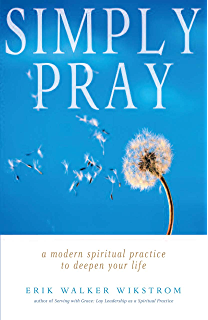
In my book Simply Pray: a modern spiritual practice to deepen your life I describe four different types of prayer:  Naming, Knowing, Listening, and Loving.  I describe in detail in the book, of course, and I wrote a post here -- Types of Prayer -- back in September of 2018.  Here's the briefest of overviews:

  • Naming prayers are like prayers of praise, thanksgiving.  They focus on naming the things we are grateful for in our lives -- the glory of a sunrise, a loved one's presence in your life, your life itself, the Infinite and Inestimable I Am.
  • Knowing prayers are like prayers of confession.  That term -- confession -- carries a lot of baggage for a lot of folks today, some of it deserved and some not.  Think instead, then, of Step 4 of Alcoholics Anonymous:  "a searching and fearless moral inventory."  Just as a shopkeeper should take inventory regularly, making note of the things they have that are in good shape as well as those that are outdated or in some other way(s) spoiled.  No shame, no blame, no condemnation.  These prayers aim to help us in truly knowing ourselves -- strengths and weaknesses, both.
  • Listening prayer is about silencing the internal chatter and listening to what the writer(s) of  the Biblical book 1 Kings called "the still small voice."  (I've been told that a better translation is "the voice of quiet stillness.") 
  • Loving prayers are analogous to prayers of petition or supplication.  Call to mind those who are in need of support, strength, comfort, love.  Make sure to include yourself in these!  These prayers are an opportunity to express your loving intentions.
Is there one of these types of prayer that speaks most strongly to you?  Some religious traditions tend of focus more on one than the others, and many people seem to have a natural inclination toward one.

As an experiment -- switch things up.  For a month (or even just a week, depending how frequent your practice is), spend less time with the type of prayer to which you're usually drawn and emphasize a type you'd be more likely to minimize.  If you keep a journal, note what this switch surprises you with.  This could also provide a great topic for conversation with a spiritual director.


Pax tecum,

RevWik


Monday, March 25, 2019

"Music is What Feelings Sound Like ..."

Isn't that a great quote?  I haven't been able to find out (definitively) who said it, but whoever it was really kind of nailed it, didn't they?  Music can get our bodies moving; it can inspire us to dig deep and pull out our courage.  A song can help us to really feel our sorrow, or can perfectly express our joyful exhalation.

On her blog Notes from the Far Fringe, my friend, the Rev. Kimberly Debus, has a section called "Hymn by Hymn," in which she posted a daily reflection on the hymns in the Unitarian Universalist hymnals Singing the Living Tradition and Singing the Journey, one hymn each day.  I know several people who always seem to wake up with a song stuck in their head use it as a kind of journal prompt, reflecting a little each day on why that particular song might be on their mind.

I had a musical practice for a few years, when I was living on Cape Cod and working in Boston.  The commute by bus was about an hour and a half each way, and I took to listening to one piece of music, repeated, for the entire trip.  By the time I arrived at South Station it had become a part of me, like my in-breaths and out-breaths.

What's your relationship with music?  Is it part of your spiritual practice?  Might it be (without your even being aware of it)?

Pax tecum,

RevWik


This was one of my favorite song-prayers during those bus ride commutes:


Monday, August 6, 2018

Talking To Yourself

This week I want to offer an exercise.  You can do it once, or several times.  You can do it in your head, out loud, or in a journal.  The only thing you need, really, is the right attitude -- be playful.  If you over-think it, it won't work.  If it does work for you, though, it this can be really illuminating.

Think back to a time when you thought you had a pretty good idea of how you wanted your life to be.  Maybe you were 16 when you had it all figured out; maybe you were 12.  Maybe, for you, it was even a little younger than that, or a little older.  It is certainly possible that at different ages you had it all "figured out" in different ways.  So here's your first chance to avoid over-thinking.  Don't try to come up with the "right" age, the "perfect" age.  Just think back to a time when you thought you had a pretty good idea of how you wanted your life to be.

When you have an age in mind, create a scene for this younger you.  What were your favorite things to wear?  What kind of music would you have been listening to?  Would your room have smelled like incense (or something else)?  Or do you see yourself somewhere else?  Try to imagine yourself, at the age you've chosen, in a setting that makes sense to you, and try to give all of your senses something to play with.

Then imagine you, as you are now, entering the scene.  Introduce yourself to your younger you.  Make whatever small talk comes to you, and then ask the question:  so ... how do you think I've done with your life?

Remember ... don't over-think this.  If a feeling comes up, listen to it.  If words -- whether they surprise you or not -- go with them.  Don't question your younger you's responses, just pay attention to them.  Ask questions, but don't challenge or defend.

It's good to make some kind of record.  Write the "conversation" down in a journal, if that works for you.  Record yourself narrating the encounter, if that's easier.  And -- once more -- don't over-think this.  Be playful.  Be curious.  If you like, think of this as a kind of lucid dream, and see what you might learn from it.

Pax tecum,

RevWik